

The Modern Shopper's Buying Guide to Real Sterling Silver Jewelry
What Is Sterling Silver and How Does It Compare to Other Metals?
To appreciate why fine silver jewelry has stood the test of centuries, we have to look at what actually makes up the metal. Pure silver (often called fine silver) is a naturally occurring elemental precious metal boasting a radiant, reflective white luster. However, in its pure state, it is exceptionally soft—almost like warm butter in the hands of a jeweler. If you made a slender ring or a delicate chain out of pure silver, it would bend, warp, and scratch under standard daily wear.
To solve this, master metallurgists created sterling silver. By combining 92.5% pure silver with 7.5% alloy metals—almost universally copper—the metal retains its brilliant, cool luster while gaining the structural strength, hardness, and durability needed for lifelong fine jewelry. This alloying process is a foundational chapter in the broader history of silver as a material for both currency and adornment.
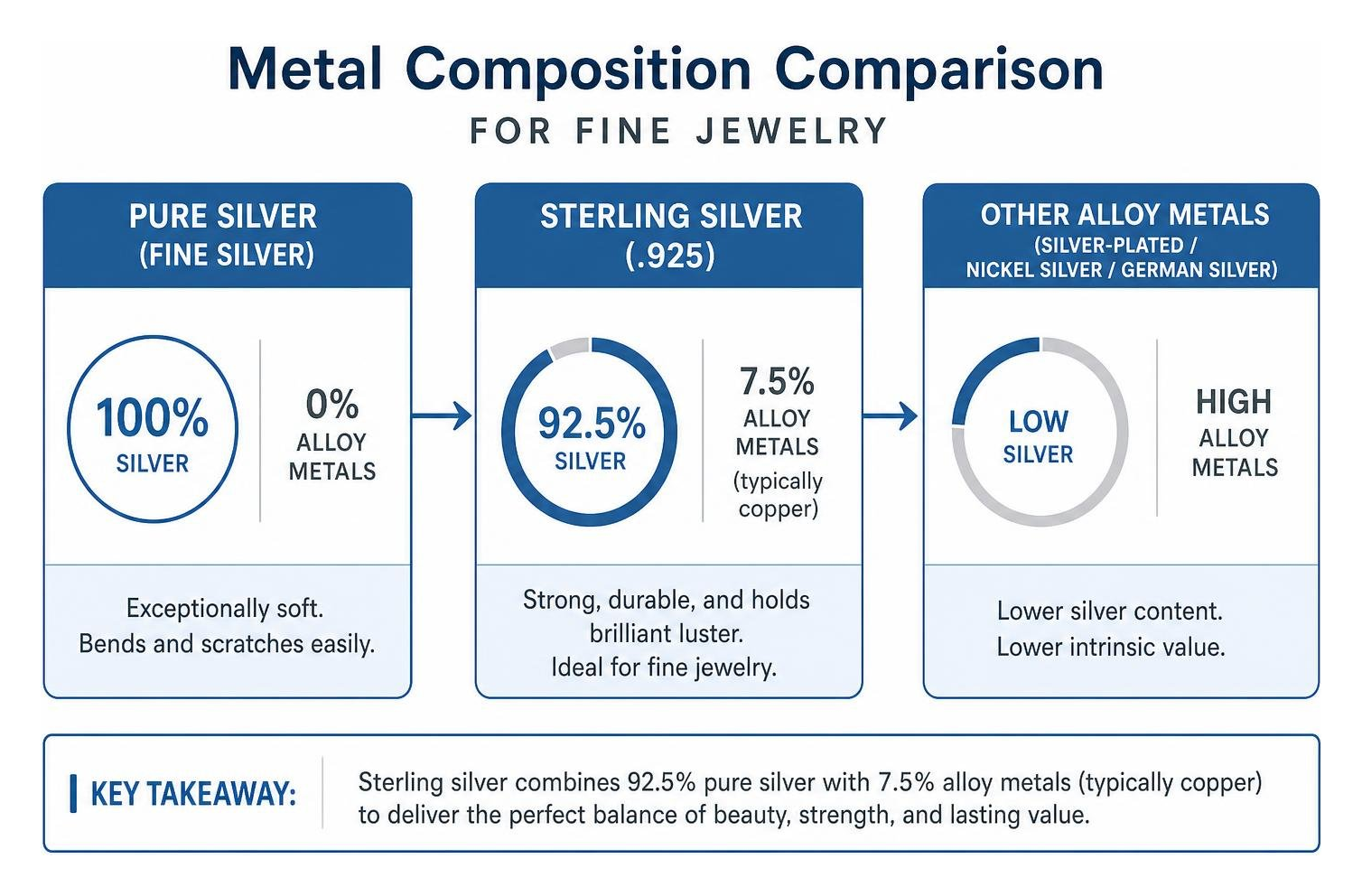
When shopping, it is easy to get lost in a sea of industry terms like "silver-plated," "nickel silver," or "German silver." Understanding the physical differences between these metals helps protect your investment.
| Metal Type | Silver Purity | Alloy Content | Pros | Cons |
|---|---|---|---|---|
| Sterling Silver (.925) | 92.5% | 7.5% (typically copper) | Strong, durable, hypoallergenic, holds intrinsic value, can be polished endlessly | Naturally tarnishes over time when exposed to sulfur/humidity |
| Fine Silver (.999) | 99.9% | 0.1% trace elements | Highly tarnish-resistant, extremely pure | Too soft for most everyday rings, bracelets, and clasps |
| Silver-Plated Base Metal | < 1% (thin surface wash) | Brass, copper, steel, or zinc core | Inexpensive upfront cost | Plate wears away quickly, reveals base metal, cannot be restored |
| Nickel / German Silver | 0% (No real silver) | 60% copper, 20% nickel, 20% zinc | Inexpensive, mimics silver tone | Contains zero precious metal; frequently causes severe allergic skin reactions |
| Stainless Steel | 0% | Iron-chromium alloy | Highly durable, scratch-resistant, does not tarnish | Industrial look, lacks the warm glow and intrinsic value of precious metals |
Hallmarks, Purity Standards, and Verifying Authenticity
How can you be certain you are holding authentic precious metal rather than a base metal coated in a silver wash? The easiest way to verify authenticity is to examine the piece for an official maker's hallmark. Legitimate fine jewelry will bear stamps such as:
- 925 or .925
- STER or STERLING
- Sterling Silver
These stamps are usually tucked discreetly on the inner band of a ring, the back of a pendant, or near the end-loop or clasp of a chain. For example, a quality foundational chain like a sterling silver round wire necklace will feature a clean, crisp purity mark near its secure closure.
Beyond inspecting stamps, you can perform simple authenticity checks:
- The Magnet Test: Precious metals like silver and gold are non-magnetic. If a simple kitchen magnet strongly snaps to the body of your jewelry, the piece is likely steel or iron with a thin surface finish.
- The Weight & Warmth Test: Solid silver possesses a pleasing, substantial heft and conducts body heat almost instantly when held in your palm. Base metals or hollow plastic fakes often feel light, tinny, or cold for much longer.
- Professional Acid/XRF Testing: When in doubt, a trusted family jeweler can quickly run a non-destructive electronic or acid touchstone test to confirm exact purity down to the decimal point.
Hypoallergenic Qualities and Skin Sensitivity
If you have ever worn a piece of inexpensive costume jewelry only to end up with an itchy red rash or a dark green band around your skin, you have experienced contact dermatitis. This reaction is almost always caused by base metals—particularly nickel, lead, or low-grade zinc.
Genuine sterling silver crafted by reputable fine jewelers is naturally nickel-free and hypoallergenic. Because the 7.5% alloy is made of pure, skin-safe copper, it is exceptionally biocompatible. For shoppers with sensitive ears or delicate skin, choosing solid .925 silver earrings and necklaces provides complete peace of mind and irritation-free daily wear.
Why Invest in Real Sterling Silver Jewelry?
Sterling silver occupies a sweet spot in the jewelry world: it offers the prestige, weight, and longevity of a genuine noble precious metal at an accessible price point. While fast-fashion fashion pieces end up in landfills after a few weeks of wear, solid silver lasts for generations.
Furthermore, fine silver holds intrinsic scrap value. Because it is an internationally traded commodity, every solid ounce of silver you own retains real-world precious metal worth. It represents sustainable, heirloom luxury—pieces you can cherish today and pass along to children and grandchildren tomorrow.
Craftsmanship, Longevity, and Price Factors
The price of fine silver jewelry depends on four main elements:
- Current Precious Metal Spot Price: The foundational value of the raw silver content.
- Weight & Density: Heavier, solid-cast pieces require more precious material than lightweight, stamped components.
- Artisan Labor & Hand-Finishing: Unique, sculptural details—such as our master silversmiths carefully setting an authentic historical artifact into a fleet coin pendant—demand extensive bench time, hand-polishing, and expert stone-setting.
- Hardware & Clasp Quality: Sturdy lobster clasps, durable hinges, and reinforced bails ensure the jewelry stays securely on your body through years of movement.
When you evaluate a piece, look beyond the price tag to the quality of its construction. Smooth bezel edges, seamless solder joins, and solid under-galleries are the true hallmarks of master craftsmanship.
Solid Sterling Silver and Long-Term Wear
One of the greatest misconceptions in modern jewelry shopping is confusing silver-plated jewelry with solid sterling silver. Plated jewelry consists of an inexpensive base metal (like brass) submerged in an electroplating tank to receive a microscopic silver skin. Within months of regular friction, skin oils, and water exposure, that paper-thin layer wears away, exposing dull, dark metal underneath that cannot be repaired.
Solid sterling silver, by contrast, is .925 precious metal all the way to its core. If you bump or scratch a heavy cable bangle bracelet, you never have to worry about revealing a cheap mystery metal. Any minor surface scuff can be buffed smooth, and any deep patina can be restored back to its original showroom shine by a professional jeweler.
Most Popular Styles and Motifs in Fine Silver
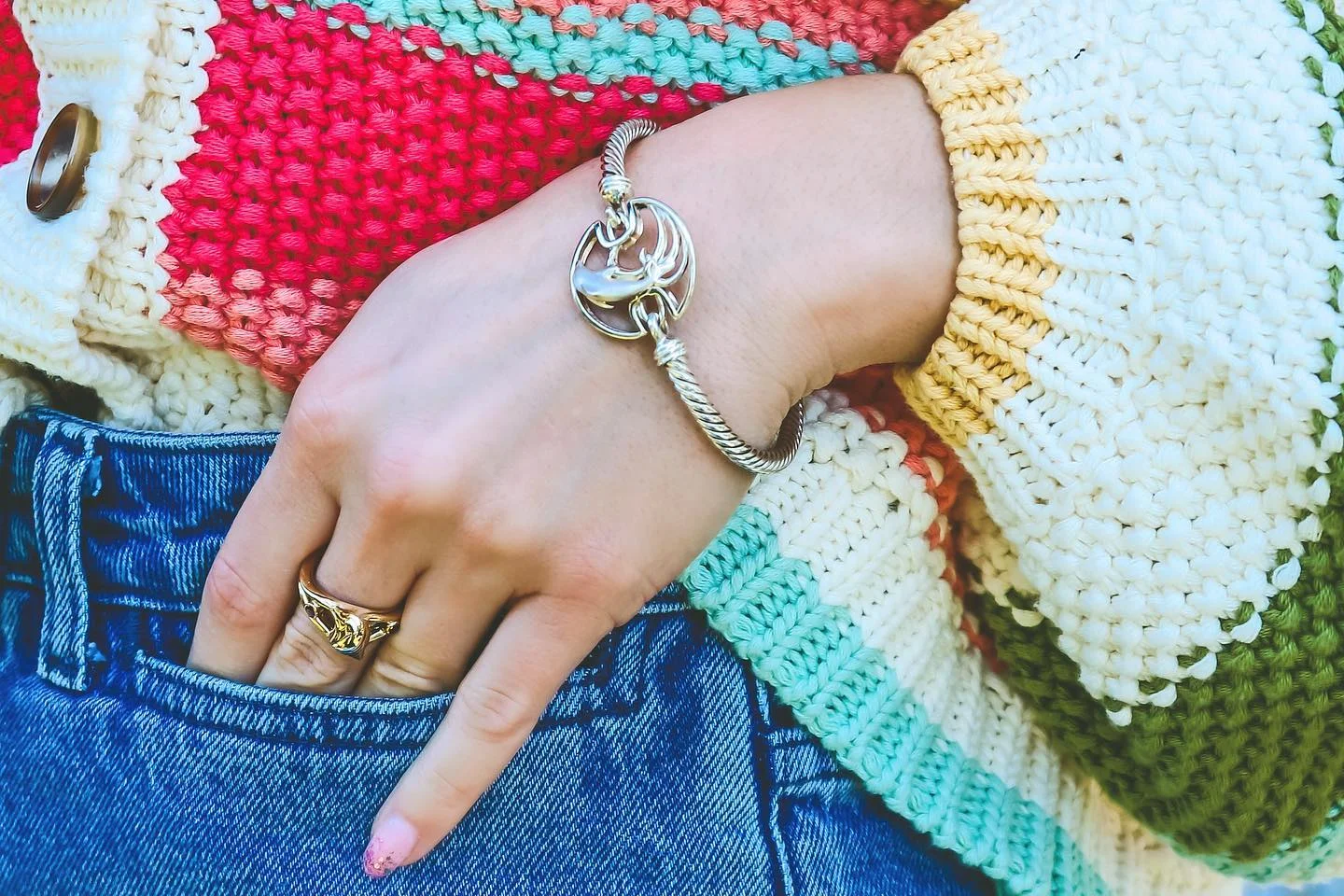
Because of silver's remarkable malleability and strength, artisans can transform the metal into an astonishing range of designs—from whisper-thin chain links to bold, dimensional statement cuffs.
Iconic Coastal and Nature-Inspired Designs
Few themes complement the radiant, sunlit glow of silver quite like the ocean. The natural world has inspired silversmiths for generations, translating organic sea life and sweeping tides into timeless wearable art.
- Dimensional Sea Life: From delicately articulated starfish to graceful marine life, dimensional silver captures movement and light effortlessly. Pairing classic sanddollar wire earrings with matching natural accents creates a look that is playful yet distinctly sophisticated.
- Ocean Waves & Nautical Bands: Sweeping crests and aquatic silhouettes bring texture to your fingers. A sculptural triple sanddollar ring serves as an immediate conversation starter, catching sunlight from every angle.
- Focal Pendants: A finely detailed wave dolphin pendant suspended on an understated chain offers an everyday touchpoint of coastal serenity.
- Stackable Bangles & Cuffs: Stacking textured wristwear like a handcrafted captiva island bangle provides rhythmic movement and a satisfying tactile chime as you move through your day.
Styling Everyday Sterling Silver Jewelry for Any Occasion
The cool, neutral tone of silver makes it one of the most versatile elements in any modern wardrobe. Here is how to style your collection seamlessly:
- The Art of Layering: Create depth by combining two or three chains of varying lengths and link textures (such as a 16-inch round wire collar paired with an 18-inch box chain and a 22-inch pendant).
- Effortless Stacking: Mix slender smooth bands with heavily carved or stone-set rings across multiple fingers. Balance a bold statement ring on one hand with a cluster of delicate bands on the other.
- From Coastal Casual to Black-Tie: Silver transitions effortlessly from a linen shirt and denim shorts at a beachside café to a sleek black evening gown under ballroom chandeliers.
- Mixed-Metal Harmony: Gone are the days of rigid metal matching. Pairing bright silver with warm yellow gold or blush rose gold creates a curated, modern aesthetic that shows true personal style.
Caring for Silver to Prevent and Remove Tarnish
Tarnish is not a flaw, a defect, or a sign of poor quality—it is simple, natural chemistry. When the copper alloy within .925 sterling silver is exposed to airborne sulfur compounds, humidity, and atmospheric oxygen, it undergoes a chemical reaction that creates a thin surface film of silver sulfide. This begins as a light golden-yellow warmth and, if left unchecked, darkens into deep charcoal gray or black.
The good news? Because tarnish is purely a surface-level oxidation, it is 100% reversible and never compromises the underlying integrity of your solid silver.
Essential Care and Cleaning for Sterling Silver Jewelry
Keeping your silver radiant requires minimal effort when you follow these fundamental best practices:
- The "Last On, First Off" Rule: Always apply perfumes, sunscreens, body lotions, hairsprays, and cosmetics before putting on your jewelry. The chemicals in these products accelerate oxidation.
- Routine Wear Is Your Best Friend: Believe it or not, wearing your silver frequently is the easiest way to prevent tarnish! The natural oils in your skin gently buff the metal and slow down the sulfur reaction.
- Gentle At-Home Cleaning: For light cleaning, submerge your silver in a small bowl of warm water mixed with a few drops of mild, phosphate-free dish soap. Use a clean, ultra-soft baby toothbrush to gently loosen trapped dirt, rinse thoroughly under clean running water, and dry completely with a lint-free cloth.
- Use Professional Polishing Cloths: To eliminate light surface oxidation, use a dual-layer jeweler's polishing cloth. The chemically treated inner cloth lifts the tarnish, while the soft outer cloth buffs the metal to a mirror shine. Never use abrasive paper towels, tissue paper, or baking-soda paste on high-polish pieces, as these can leave microscopic swirl scratches.
- Proper Airtight Storage: When your pieces are not in rotation, store them in dry, airtight zip-top bags or specialized anti-tarnish lined pouches. Tossing in a small silica gel packet helps absorb ambient humidity.
Frequently Asked Questions About Sterling Silver
Can you wear sterling silver in the shower or water?
While clean, fresh tap water will not permanently harm solid sterling silver, you should avoid wearing your jewelry in the shower. Shower steam, body washes, exfoliating scrubs, and shampoo residue leave a dull film on the metal and accelerate oxidation.
You should never wear silver in chlorinated swimming pools, hot tubs, or natural thermal hot springs. Chlorine and sulfur compounds react aggressively with silver alloys, turning the metal dark brown or black within minutes. If you accidentally wear your silver into the ocean, rinse it thoroughly in fresh water immediately afterward and dry it completely.
How can you verify authentic 925 sterling silver?
Authenticity comes down to verifying purity marks, physical weight, and buying from established jewelers. Check for a clear "925" or "Sterling" hallmark stamped directly into the metal. Perform a magnet test (silver will not stick), note whether the piece warms to your body temperature rapidly, and confirm that the seller provides transparent metal documentation and repair guarantees.
Why does sterling silver tarnish, and is it permanent?
Tarnish occurs when the alloyed copper in .925 silver reacts with trace sulfur particles naturally present in the air. Tarnish is purely a topical, surface-level layer of silver sulfide—it is never permanent. A quick rub with a treated jewelry cloth or a brief trip to your jeweler’s polishing wheel will instantly strip away the oxidation, revealing the flawless, bright precious metal underneath.
Conclusion
Choosing genuine sterling silver is an investment in timeless elegance, everyday durability, and authentic craftsmanship. Whether you are searching for a personal talisman, a meaningful gift, or a daily staple that will weather the years with grace, real .925 silver delivers the enduring glow of a true precious metal without pretense.
As a fourth-generation family jeweler crafting locally on Sanibel Island, Florida, we take immense pride in creating pieces that capture the spirit of life by the water. Explore our handcrafted collections of fine sterling silver jewelry to find a design made to last a lifetime.


Leave a comment