

Styling Ruby Rings for Everyday Wear and Special Occasions
Choose Ruby Rings That Fit Your Style and Life
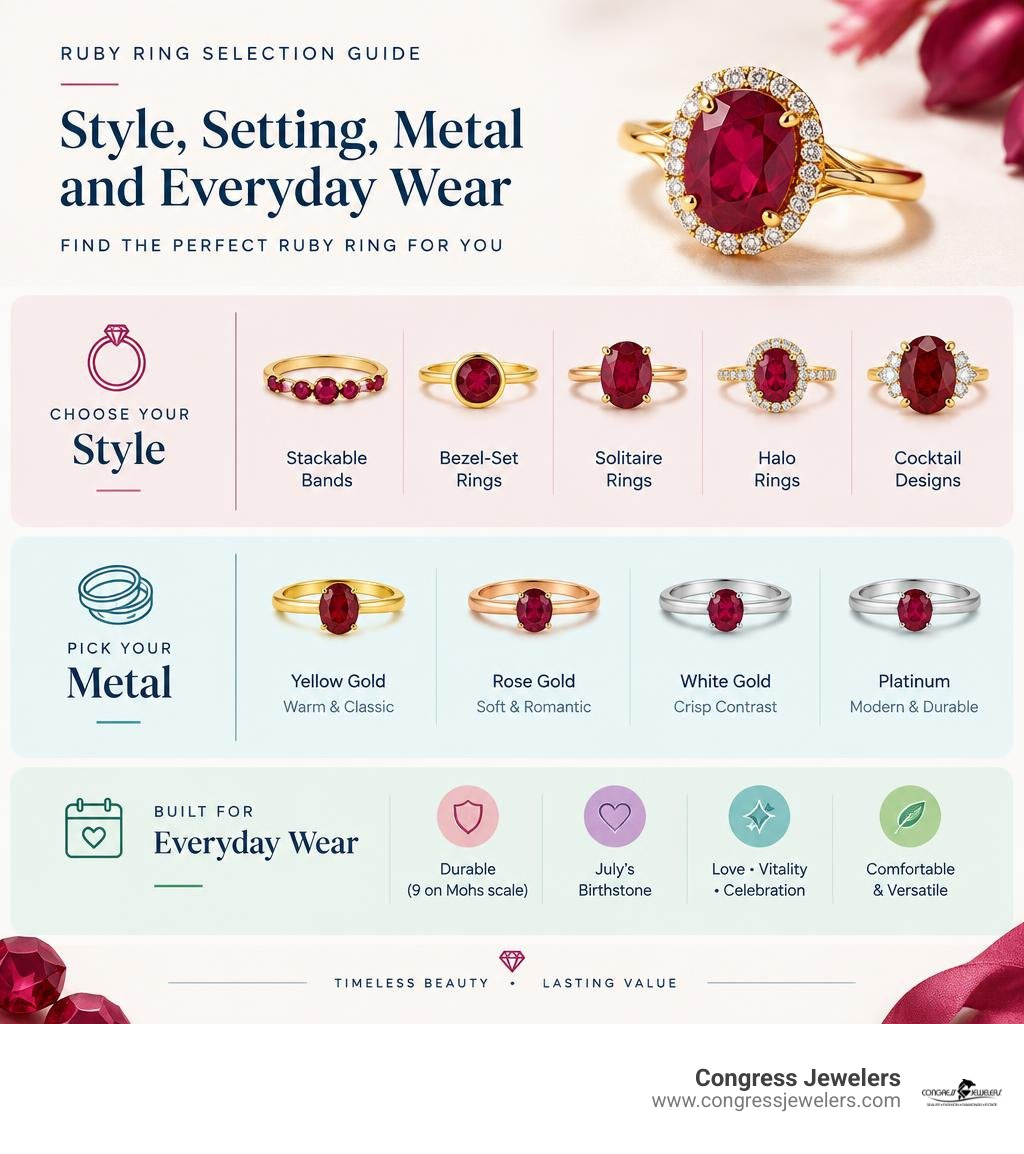
Ruby rings work beautifully for both daily wear and milestone moments. Start by choosing a setting that suits your routine: slim stackable bands are easy to layer, bezel-set rings offer added edge protection, and solitaire, halo, or cocktail designs create a stronger formal statement. Then select a metal that supports the look you want - yellow gold feels warm and classic, rose gold is soft and romantic, while platinum and white gold create crisp contrast with ruby's red.
Ruby is a variety of corundum and ranks 9 on the Mohs scale, just below diamond. That makes a well-made ruby ring a practical fine-jewelry choice for regular wear. It is also July's birthstone and has long been linked with love, vitality, and celebration.
Whether you prefer a subtle ruby-and-diamond stacking band or a bold center-stone design, the best ring balances color, secure craftsmanship, comfort, and a profile that fits your everyday wardrobe.
Comparing Popular Styles of Ruby Rings
Selecting the right ring comes down to balancing structural design, setting type, and visual impact. Because rubies are remarkably durable, jewelry artisans can set them into delicate bands or substantial statement pieces without compromising longevity.
| Ring Style | Common Setting Types | Stone Profile & Carats | Best Occasions | Daily Wear Comfort |
|---|---|---|---|---|
| Stacking Eternity Bands | Shared-prong, channel, pavé | 0.30–1.00 ctw (melee to 2.5mm stones) | Daily wear, anniversaries, bridal stacks | Exceptional; low-profile, smooth edges |
| Solitaire Rings | 4-prong, 6-prong, bezel | 0.50–3.00+ ct center stone | Engagements, milestones, daily luxury | High; prongs require periodic inspection |
| Halo & Double Halo Rings | Prong-set center with micro-pavé halo | 0.75–2.50+ ct center (accent diamonds) | Galas, black-tie events, cocktail parties | Moderate; elevated setting catches light |
| Toi et Moi / Multi-Stone | Bezel, semi-bezel, prong | 0.30–1.50 ctw (pear, oval, round) | Romantic gifts, fashion pinky rings | High; protective bezels suit active hands |
| Signet & Gypsy Rings | Flush / star setting, gypsy mount | 0.10–0.50 ct flush-set stones | Casual everyday wear, signature thumb/pinky rings | Maximum; stones sit flush with metal |
When deciding on a silhouette, keep in mind how the ring interacts with your daily routine. Raised prong settings maximize light transmission into the red corundum crystal, enhancing color vibrancy, while bezel or flush mountings surround the gemstone's girdle with solid gold or platinum for complete edge security.
Everyday Stacking Bands and Ruby Rings
Stackable eternity bands provide effortless versatility. Designed with slim band widths—often between 1.5 mm and 2.5 mm—these pieces slip comfortably alongside wedding rings or standalone gold bands. In a classic shared-prong or channel alignment, alternating red gemstones and diamonds creates a rhythmic visual contrast.
For a balanced piece that transitions smoothly from morning meetings to evening dinners, an 18k white gold three row ruby and diamond band combines the fire of brilliant round diamonds with intense red corundum.
Slim bands with shared prongs let each gemstone draw maximum light. Designs featuring seven round rubies totaling around 0.42 carats paired with round accent diamonds provide a continuous sparkle that sits comfortably against adjacent fingers without rubbing.
Statement Cocktail and Solitaire Ruby Rings
When an outfit calls for a bold focal point, a cocktail ring or an ornate solitaire commands attention. Halo designs amplify the visual presence of a central ruby by encircling it with a ring of brilliant diamonds. This technique enhances the red stone's silhouette while contrasting its deep tones against sparkling white diamond facets.
For momentous celebrations, the 18k white gold double halo twist oval ruby and diamond ring showcases this dynamic. The fluid, twisting shank draws the eye inward toward the rich crimson center, framed by twin tiers of shimmering accent stones.
Symbolic configurations are equally captivating:
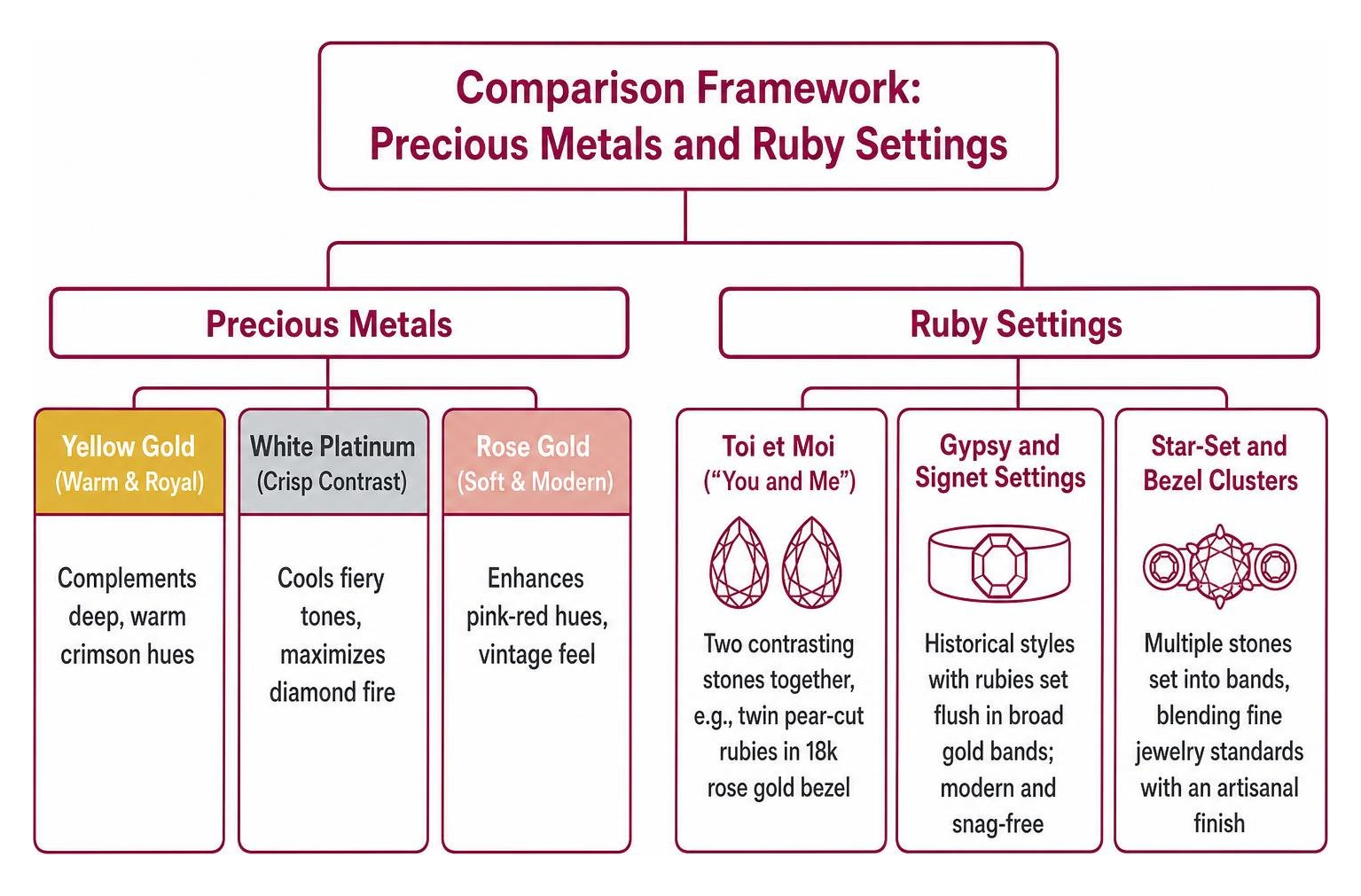
- Toi et Moi ("You and Me"): Features two contrasting stones nestled together, such as twin pear-cut rubies in an 18k rose gold bezel, representing two lives intersecting.
- Gypsy and Signet Settings: Historical styles where rubies sit embedded flush within broad bands of yellow gold, offering a modern look that never snags delicate fabrics.
- Star-Set and Bezel Clusters: Artistic arrangements featuring multiple stones set directly into organic metal bands, balancing fine jewelry standards with an artisanal finish.
Precious Metals and Settings for Natural Rubies
The metal you select forms the canvas for your gemstone. Because ruby contains trace amounts of chromium that produce its signature glow, different metal colors will highlight distinct undertones in the red crystal.
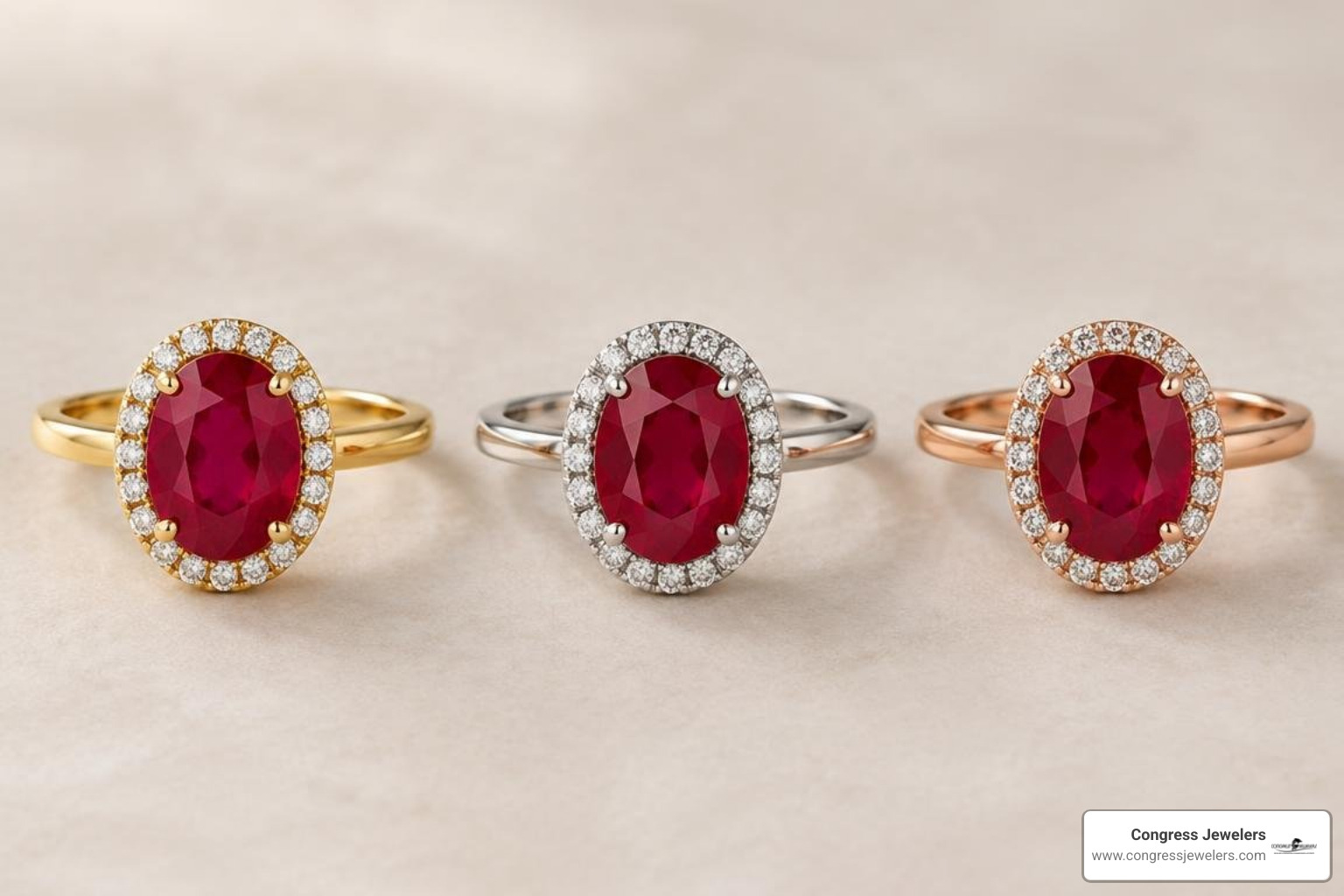
When curating your heirloom piece, comparing metals helps define both character and structural performance:
Warm Tones: Yellow Gold and Rose Gold
Yellow gold brings out the warm, regal richness of ruby, creating an aesthetic favored across centuries of royal jewelry design. Solid 14k or 18k yellow gold offers rich saturation, while 9kt yellow gold provides a vintage look suited for daily signet rings.
Rose gold, alloyed with copper, adds a warm blush that flatters softer pinkish-red rubies. Bezel settings in 18k rose gold create a seamless transition between the warm metal and the stone's natural luster, giving contemporary pinky rings and multi-stone bands an inviting look.
If you enjoy wearing both warm and cool metals, a two-tone gold ruby and diamond band blends the sunshine radiance of 14k yellow gold with crisp white gold accents, creating an adaptable piece that coordinates with any watch or bracelet in your collection.
Cool Elegance: Platinum and White Gold
For a crisp, modern aesthetic, white metals provide a striking frame for rich red corundum. Platinum is naturally white, dense, and hypoallergenic. It develops a soft satin patina over decades of wear without ever thinning or losing metal volume.
A masterfully crafted platinum Burmese ruby and diamond ring represents the pinnacle of this contrast. The cool, weighty platinum basket holds the vibrant, unheated red gemstone securely, allowing surrounding white diamonds to enhance the ruby's natural color.
White gold, alloyed with nickel or palladium and finished with rhodium plating, delivers a brilliant mirror sheen that maximizes light reflection. When paired with halo prong mounts, white gold reflects extra light through the pavilion of the ruby, producing an intense sparkle across every facet.
How to Layer and Coordinate Ruby Jewelry
Styling fine ruby pieces is all about curating balance and color. Rather than matching every item precisely, combining varied textures, diamond accents, and contrasting stones produces an artful, personal look.
Pairing Rings with Bridal Bands
Integrating a colored gemstone into your bridal suite introduces distinct personality while honoring traditional elegance.
- Flush Stacking: Choose eternity or semi-eternity ruby bands with straight profiles that sit flush against your diamond engagement ring, eliminating gaps.
- Contour and Chevron Curves: If your engagement ring has a low-set center stone, a curved ruby band hugs the basket, framing the diamond with a flash of crimson.
- Symmetrical Ring Guards: Sandwiching a diamond solitaire between two matching ruby bands creates a balanced, architectural design suitable for anniversaries and formal occasions.
To build a cohesive suite across your wrist and neckline, pair your bridal rings with an 18k white gold four prong ruby and diamond bracelet. The repeating diamond-and-ruby line echoes your ring stack without feeling crowded.
Coastal and Casual Gemstone Accents
Fine jewelry should feel natural in relaxed settings as well. At Congress Jewelers, our fourth-generation artisans draw direct inspiration from Sanibel Island, handcrafting coastal motifs that bring fine gems into effortless daily wear.
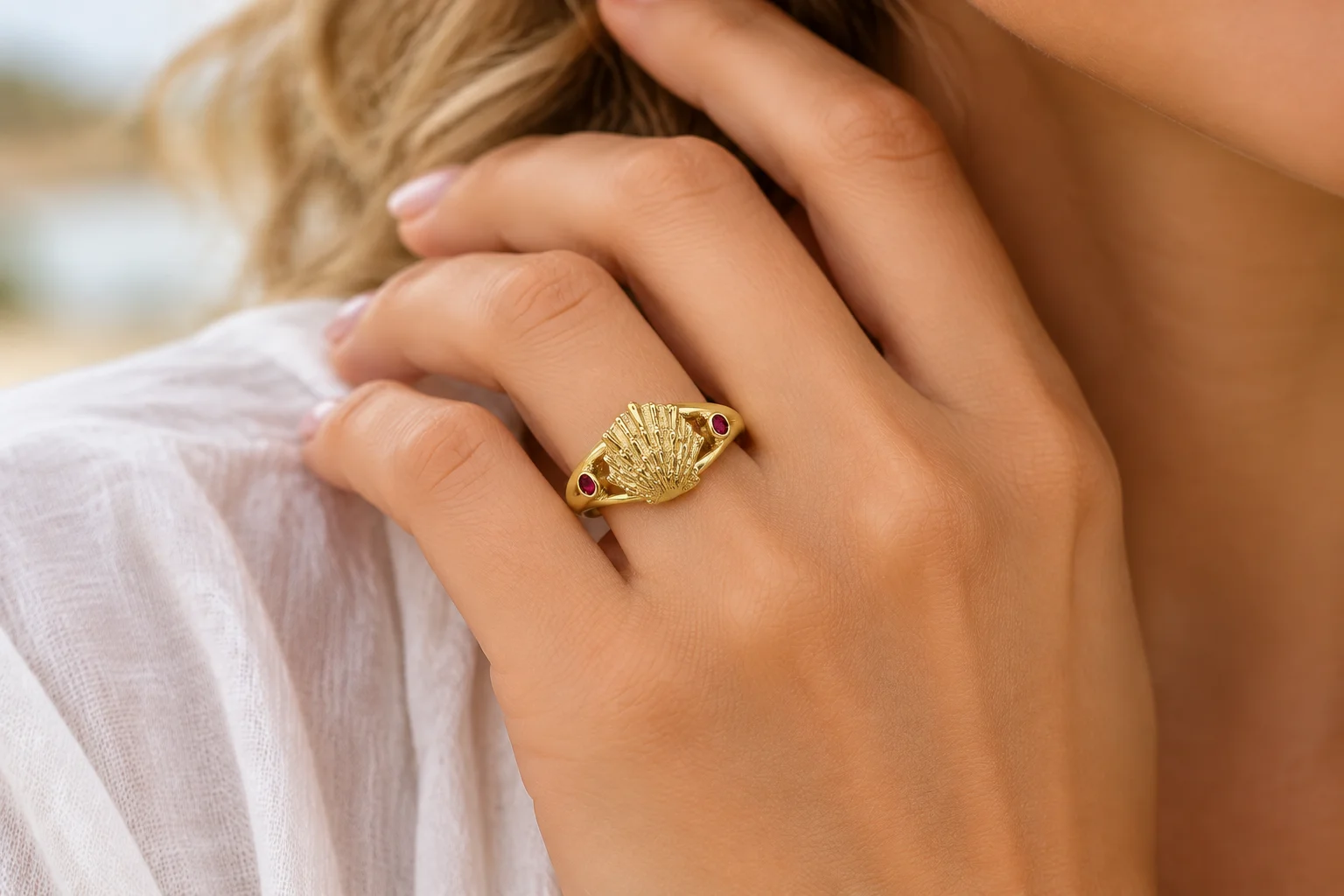
For everyday island elegance, the sterling silver July birthshell ring with rubies pairs the sculpted texture of a Lion's Paw seashell with authentic flush-set rubies. You can also contrast your red gemstone rings against cool ocean hues by adding a 14k white gold five oval sapphire line bracelet and diamond, creating a dynamic maritime palette of red, royal blue, and white diamonds.
Buying and Caring for Fine Ruby Jewelry
Investing in a genuine ruby requires evaluating gemstone quality, responsible material sourcing, and proper long-term maintenance.
1. Gemstone Grading and Color Saturation
Rubies are graded using color, clarity, cut, and carat weight. Top-tier natural stones are rated AAA, exhibiting an evenly distributed, vibrant medium-to-deep red without brown or overly dark undertones. Natural rubies typically possess delicate internal characteristics known as silk (microscopic rutile needles), which authenticate geological origin.
2. Sourcing and Metal Sustainability
Look for rings cast from recycled gold and ethically sourced gemstones. Using recycled 14k, 18k, or platinum reduces environmental footprint while ensuring the exact metallurgical durability and purity of newly mined metals.
3. Cleaning and Daily Maintenance
- At-Home Cleaning: Soak your ring in warm water mixed with mild dishwashing soap. Gently clear away lotion and oils behind the setting using a soft-bristled baby toothbrush. Rinse thoroughly under lukewarm running water and pat dry with a lint-free cloth.
- Ultrasonic Cleaners: Untreated and heat-treated natural rubies generally tolerate ultrasonic cleaning well. However, if your ruby has undergone fracture-filling, avoid ultrasonic or steam cleaners entirely, as vibration and heat can damage the treatment.
- Routine Checks: Have your prongs and channel walls inspected annually by an experienced bench jeweler to keep every stone firmly secured.
Frequently Asked Questions about Ruby Rings
Can ruby rings be worn daily without damage?
Yes. Rubies score a 9 on the Mohs scale, making them harder than emeralds, tanzanite, pearls, and precious metals. They resist surface scratching from everyday contact with countertops, fabrics, and household items. To protect your setting during hands-on tasks, select a bezel or channel design that shields the outer edges of the gemstone.
How do I choose between natural and lab-created rubies?
Natural rubies form inside the Earth over millions of years under intense heat and pressure. Their subtle color variations and microscopic crystal inclusions give each stone an individual signature, along with strong heirloom value.
Lab-grown rubies share identical physical and optical properties with natural corundum, but they are cultivated in controlled laboratory environments. While lab-created gems offer a uniform appearance at a lower price, natural rubies carry distinct geological rarity, making them the preferred choice for investment and legacy jewelry.
Which metal best complements a vibrant red ruby?
The best metal depends on your preferred style:
- Yellow gold (14k or 18k) creates a warm, royal contrast that enriches the stone's fiery crimson hues.
- Platinum and white gold provide a bright, clean backdrop that lets the red color pop while enhancing paired white diamonds.
- Rose gold offers an understated, romantic warmth that blends harmoniously with pinkish-red gemstones.
Finding Your Signature Ruby Ring
A fine ruby ring captures an uncommon balance of brilliant color, rich history, and everyday durability. Whether you are drawn to the low-profile charm of an eternity band, the artistic allure of an island-inspired birthshell, or the presence of a double-halo cocktail design, the right piece should reflect your personal story.
Our master jewelers at Congress Jewelers handcraft every design on Sanibel Island with careful attention to proportion, comfort, and stone security. Explore our curated Ruby Gemstone Collection to discover vibrant rings, bracelets, and custom creations designed to be worn effortlessly every day.


Leave a comment