

Solitaire Engagement Rings Make Every Diamond Shape Truly Stand Out
Solitaire Engagement Rings Put the Focus on Your Center Stone
Solitaire engagement rings use one center stone and little to no side-stone detail, so the diamond shape, setting, and metal do the talking. Choose a prong setting for maximum light and a classic look, a bezel for added edge protection, or a tension-style mount for a bold, modern profile. Then match the band shape to your stone: tapered bands can make the center look larger, while knife-edge bands add crisp definition.
This simple design works with every popular shape, from round and oval to emerald, marquise, pear, and radiant cuts. It also makes quality easier to see. A well-cut stone, secure setting, comfortable fit, and durable metal matter more when there are no extra diamonds competing for attention. Because the mounting is so minimal, even small differences in cut precision, prong placement, or band proportion become visible, which is why many couples spend extra time comparing certified stones and hand-finished settings before making a final choice.
Solitaire styles also adapt beautifully to changing bridal trends. In 2026, many buyers are pairing classic four-prong heads with slightly heavier comfort-fit bands, while others are choosing open gallery profiles that let the pavilion catch light from every direction. The result is a ring that feels both timeless and distinctly personal, whether it is worn alone or stacked later with a contoured wedding band.
In this guide, explore the solitaire styles that can help your center stone stand out for the right reasons.
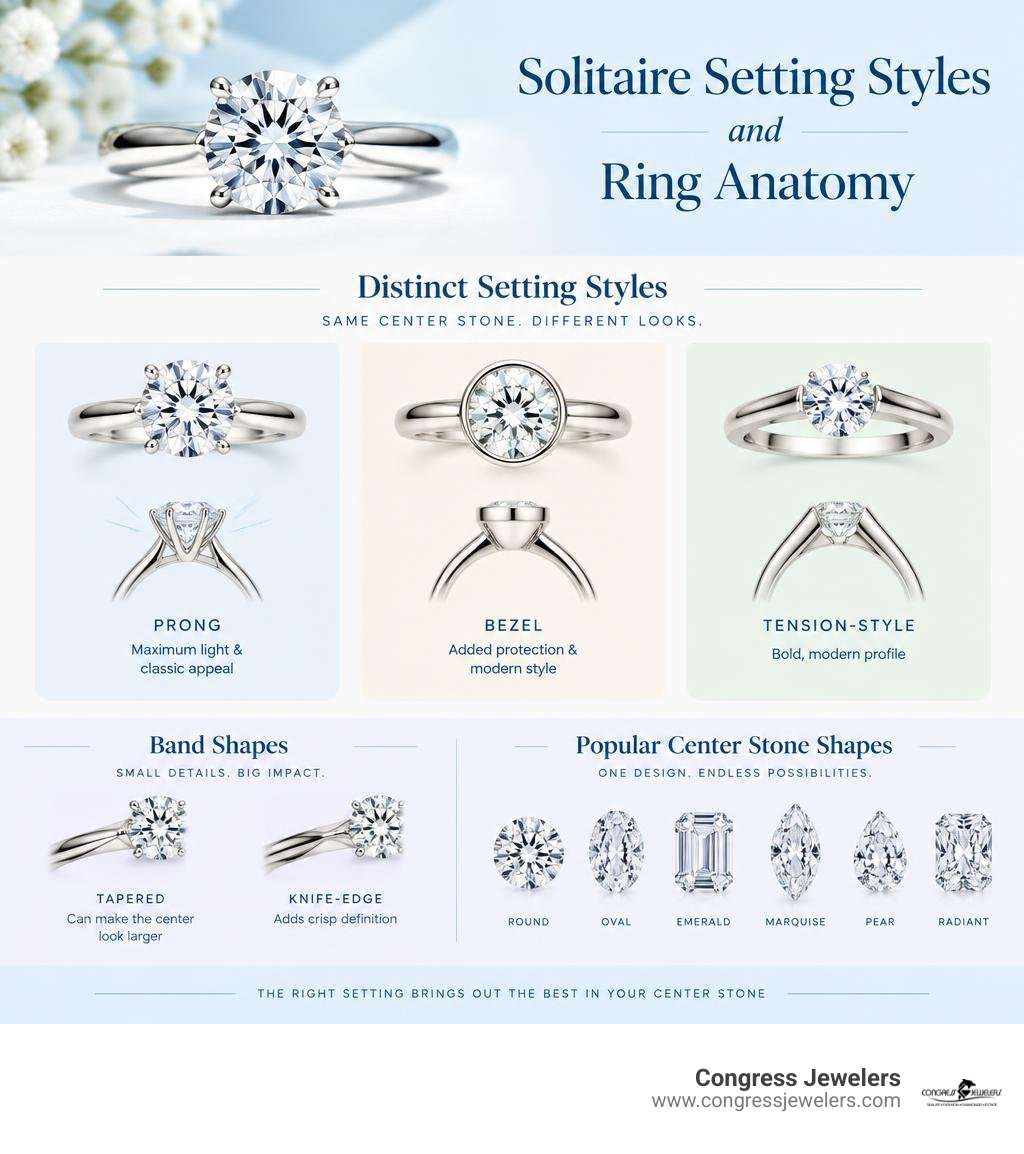
Distinct Setting Styles for Solitaire Engagement Rings
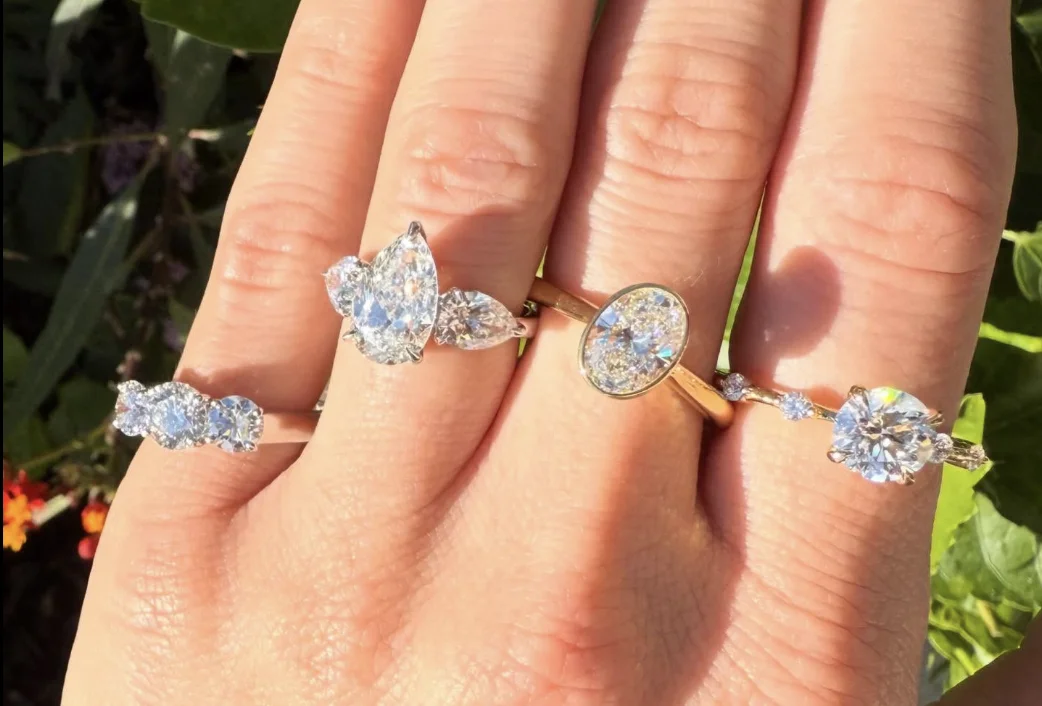
The beauty of a minimalist ring lies in how securely and artfully the center gem is held. Choosing among different diamond engagement settings lets you balance everyday durability, finger coverage, and light performance. Because the center stone is the absolute star of the show, the mount architecture determines how much light enters the pavilion and how the ring feels against adjacent fingers. A setting that looks delicate in a display case must still hold up to daily wear, which is why jewelers often recommend inspecting prongs, bezels, and tension mounts under magnification before committing to a design.
Classic Prongs, Bezels, and Tension Mounts
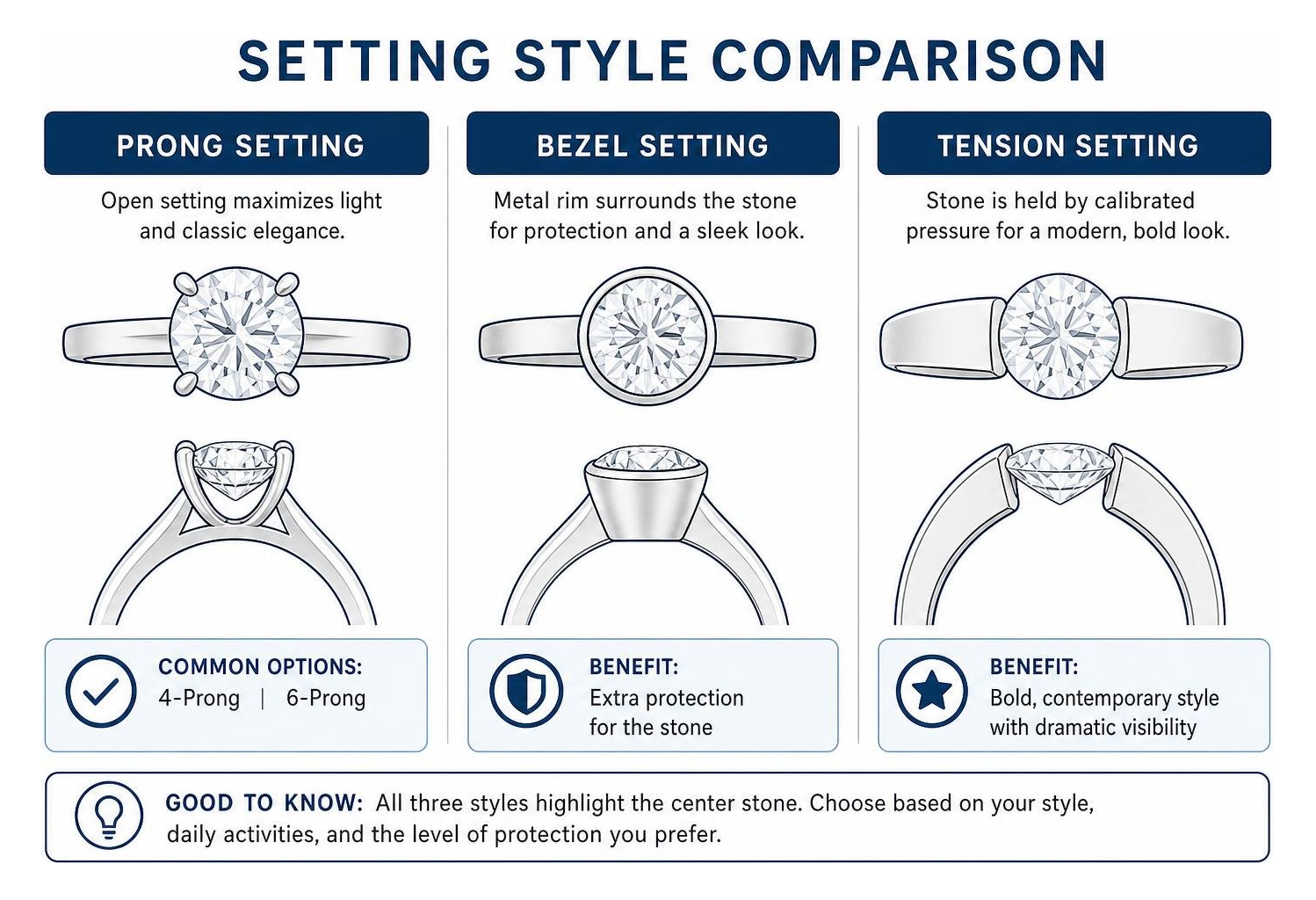
Prong settings remain the most sought-after choice for single-stone rings.
- Four-Prong Mounts: Allow maximum light to enter the gem from the sides and underneath, giving the stone a lighter, airy look. A classic 14k white gold round solitaire engagement ring with four delicate prongs lets a brilliant-cut center stone shine from every angle.
- Six-Prong Mounts: Provide superior security and create a rounder, softer silhouette around circular gems. They offer peace of mind for active wearers, and many buyers choose six prongs when the center stone is a family heirloom or a particularly valuable diamond.
- Bezel Mounts: Wrap a continuous rim of precious metal entirely around the perimeter of the stone. This modern, protective style shields fragile corners, making it an exceptional partner for step-cut stones such as a 14k yellow gold emerald cut diamond engagement ring.
- Tension Mounts: Use calibrated pressure from the metal band to hold the gem suspended in mid-air, offering an ultra-modern aesthetic with dramatic side visibility. Because the stone appears to float, tension settings work best with hard gemstones such as diamonds, sapphires, and moissanite.
Band Profiles: Knife Edge, Tapered, and Gallery-Free Mounts
The architecture of the band directly affects how the center stone is perceived on the finger:
- Knife-Edge Bands: Feature two sloping facets that meet at a sharp center ridge, drawing the eye inward toward the gem. Setting a dramatic shape on a sleek band, like our 14k white gold marquise diamond solitaire engagement ring, creates a crisp, elongating effect along the finger.
- Tapered Shanks: Narrow gently as they approach the center head, creating an optical illusion that makes any carat size look noticeably larger. This profile also reduces metal weight near the stone, which can make the ring feel lighter and more comfortable during long wear.
- Gallery-Free Mounts: Remove the traditional metal collar beneath the head, allowing the culet to float closer to the skin for an open, minimalist aesthetic. The open architecture also makes the ring easier to clean at home, since water and mild soap can reach the pavilion without obstruction.
Evaluating Center Stones: Diamonds, Moissanite, and the 4Cs
When selecting a centerpiece, understanding stone properties and gemological grades is essential. Our team values comprehensive diamond education so you can balance physical beauty with budget expectations. The Gemological Institute of America established the 4Cs of diamond quality as a universal grading framework, and reputable jewelers still rely on those standards to compare stones fairly.
| Gemstone Type | Mohs Hardness | Refractive Index | Key Advantage | Best Suited For |
|---|---|---|---|---|
| Natural Diamond | 10.0 | 2.42 | Timeless heirloom value and natural origin | Traditional buyers seeking natural rarity |
| Lab-Grown Diamond | 10.0 | 2.42 | Identical chemical and optical properties at accessible prices | Maximizing carat size and premium clarity |
| Moissanite | 9.25 | 2.65–2.69 | Exceptional fire, extreme hardness, and accessible cost | Budget-conscious buyers wanting vibrant sparkle |
Why Lab-Grown and Natural Diamonds Shine in Solitaire Engagement Rings
Both mined and cultivated diamonds share identical physical, chemical, and optical characteristics. With lab-grown stones gaining popularity in 2026, couples can secure larger carat weights with pristine D–F color grades and VVS clarity ratings within their preferred budget. Lab-grown diamonds are also graded by the same independent laboratories that certify mined stones, so buyers can compare cut, color, clarity, and carat weight on equal terms.
For those who love warm, elongated silhouettes, a 14k yellow gold oval solitaire engagement ring showcases natural or cultivated stones with clean grace. Meanwhile, moissanite scores a tough 9.25 on the Mohs hardness scale—nearly as resilient as diamond—with a higher refractive index that produces colorful flashes of light. Some buyers prefer moissanite for its rainbow-like fire, while others favor the cooler white brilliance of a well-cut diamond; both options remain durable enough for everyday engagement ring wear.
Balancing Cut, Color, Clarity, and Carat Weight
Because a single-stone setting leaves the gem exposed, quality compromises are easier to see:
- Cut: The most critical of the 4Cs. An "Excellent" or "Ideal" cut ensures maximum light refraction, masking minor internal inclusions. In a solitaire, cut quality also affects how lively the stone appears from across a room, since there are no side stones to add sparkle.
- Color: Near-colorless grades (G to I) provide exceptional face-up whiteness, particularly when paired with warm metals. A rich 18k yellow gold round diamond solitaire engagement ring flatters diamonds across the G–I spectrum by complementing the stone's warm undertones.
- Clarity: Aim for "eye-clean" stones (VS1–SI1), where inclusions are invisible without a jeweler's loupe. In a solitaire mounting, an eye-clean stone looks identical to a flawless one in normal viewing conditions, which can free up budget for a larger carat weight or a higher color grade.
- Carat Weight: Consider the millimeter spread across the top surface, not just carat weight, to optimize face-up finger coverage. Two stones of identical carat weight can look noticeably different if one carries more weight in the pavilion rather than the table.
Always look for certified center stones graded by accredited, independent gemological laboratories such as the GIA (Gemological Institute of America) or IGI (International Gemological Institute).
Precious Metals, Customization, and Sizing Considerations
Selecting the proper metal alloy ensures your ring withstands daily wear while matching your personal style. If you are searching for custom engagement rings in Cape Coral FL, our master jewelers craft one-of-a-kind mountings tailored to your exact specifications. Custom work also allows you to adjust band width, prong style, and gallery height so the finished ring feels as comfortable as it looks.
Metal Selection and Durability in Solitaire Engagement Rings
- 14k vs. 18k Gold: 14k gold contains 58.3% pure gold alloyed with durable metals, offering high resistance to scratching for active lifestyles. 18k gold features 75% pure gold, providing a deeper, richer hue with slightly softer everyday wear characteristics. Both alloys are excellent choices for solitaire mountings, and the decision often comes down to color preference and how the ring will be worn day to day.
- White Gold: Requires a rhodium plating bath periodically over the years to maintain its cool, mirror-like sheen. Most wearers schedule replating every 12 to 24 months, depending on how often the ring contacts lotions, soaps, and hard surfaces.
- Platinum: A naturally white, dense, hypoallergenic metal that develops a soft patina over time. It holds stones securely. The Flyerfit solitaire platinum engagement ring offers heirloom-grade weight and stability.
- Two-Tone Mounts: For a blended style, a Flyerfit two-tone yellow gold and platinum ring pairs a warm gold band with platinum prongs, ensuring no warm color reflects into a colorless diamond.
Accurate Ring Sizing, Customization, and After-Sales Care
Getting an accurate ring size ensures lasting comfort:
- Measure your finger at the end of the day when hands are at their natural, resting temperature.
- Avoid measuring immediately after consuming salty foods or vigorous exercise.
- Consult our comprehensive ring size guide or visit our showroom for professional sizing.
Custom designs typically require a production lead time of 2 to 4 weeks. To protect your investment, we recommend regular prong inspections, complimentary ultrasonic cleanings, and updated insurance appraisals every few years. A quick inspection every six months can catch loose prongs or worn metal before they become costly repairs, and many jewelers offer this service at no charge for rings purchased in their store.
Frequently Asked Questions about Solitaire Engagement Rings
What is the average price range for a solitaire engagement ring?
Solitaire settings generally range from $800 to $2,500 for the mounting alone, depending on metal purity and architectural complexity. Total ring costs range from $1,500 to over $15,000 based on the carat weight, natural or lab-grown origin, and gemological grades of your selected center stone. Lab-grown diamonds typically cost 30% to 50% less than natural diamonds of comparable size and quality, which allows many couples to choose a larger stone or a more intricate setting within the same budget.
Which diamond shape looks largest in a solitaire setting?
Elongated shapes—such as oval, marquise, pear, and emerald cuts—distribute more of their total carat weight across the top surface (table), creating the optical effect of a larger stone than a round brilliant of identical carat weight. The longer outline also draws the eye along the finger, which can make the entire hand look more slender and elegant.
How do you choose the right wedding band to pair with a solitaire ring?
Standard solitaire heads with high-set galleries allow straight bands to sit flush against the engagement ring. Lower-profile or basket-style heads pair beautifully with curved, chevron, or open-cuff bands. Explore our curated selection of wedding rings in Cape Coral FL to discover flush-fit, diamond-accented, or contoured bands that complete your bridal stack. If you plan to wear the rings together every day, consider trying on both pieces at the same time to check for gaps, rubbing, and overall comfort.
Conclusion
The enduring charm of a solitaire mounting lies in its clean lines, structural balance, and ability to showcase the natural fire of a single, extraordinary center gem. Whether you prefer the classic warmth of yellow gold, the bright strength of platinum, or an elongated fancy diamond shape, this iconic design remains timeless. A well-chosen solitaire also adapts gracefully over the years, pairing just as beautifully with a simple metal band as with a diamond-lined anniversary ring.
We invite you to explore handcrafted engagement rings or work with our fourth-generation artisan team at Congress Jewelers to create a custom solitaire that celebrates your story. From the first sketch to the final polish, our in-house jewelers guide you through every decision so the finished ring feels as personal as the moment it represents.


Leave a comment