

Sapphire Rings Decoded: Modern Settings, Hues, and Metal Pairings
How to Choose a Sapphire Ring You'll Love Wearing
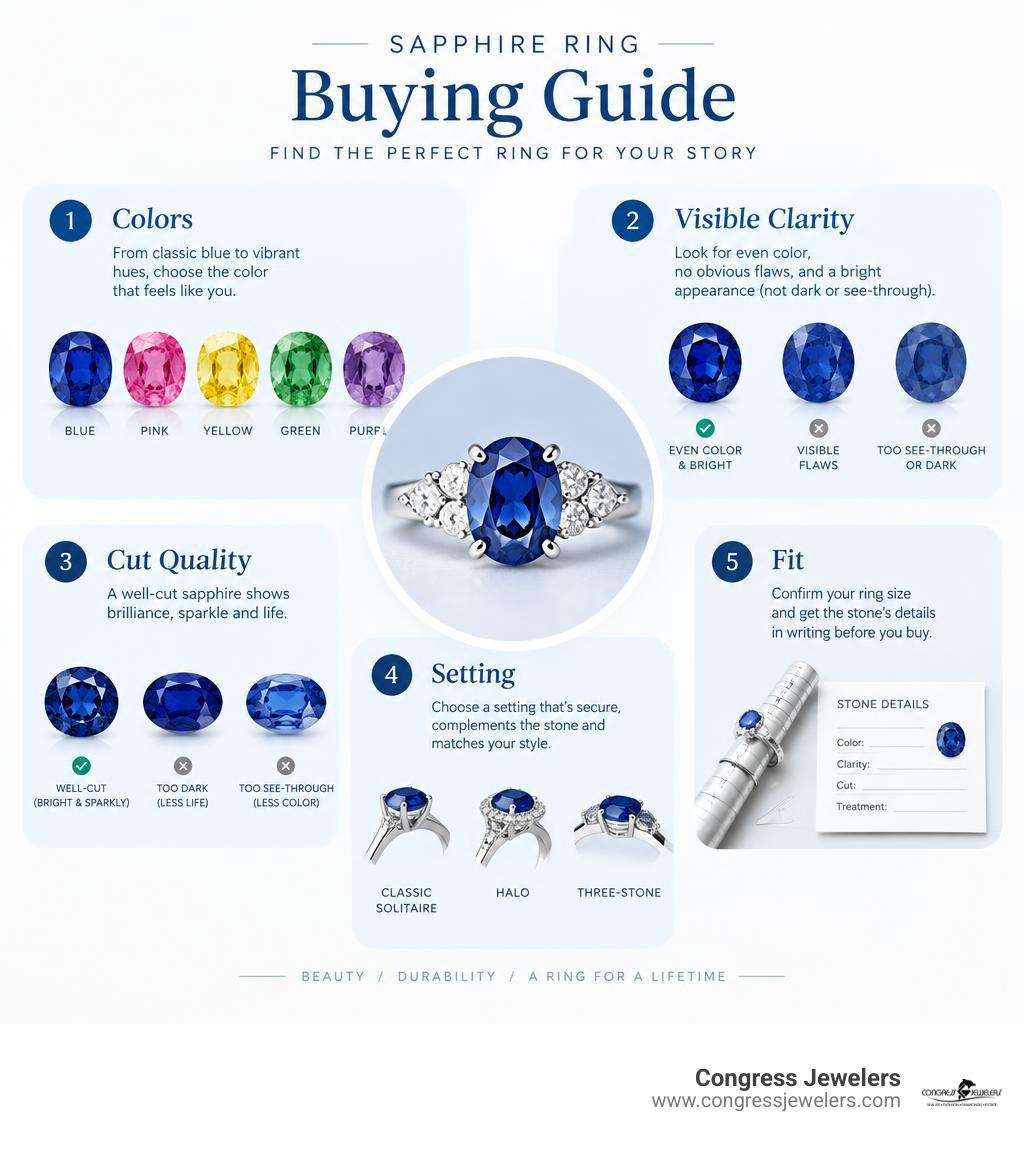
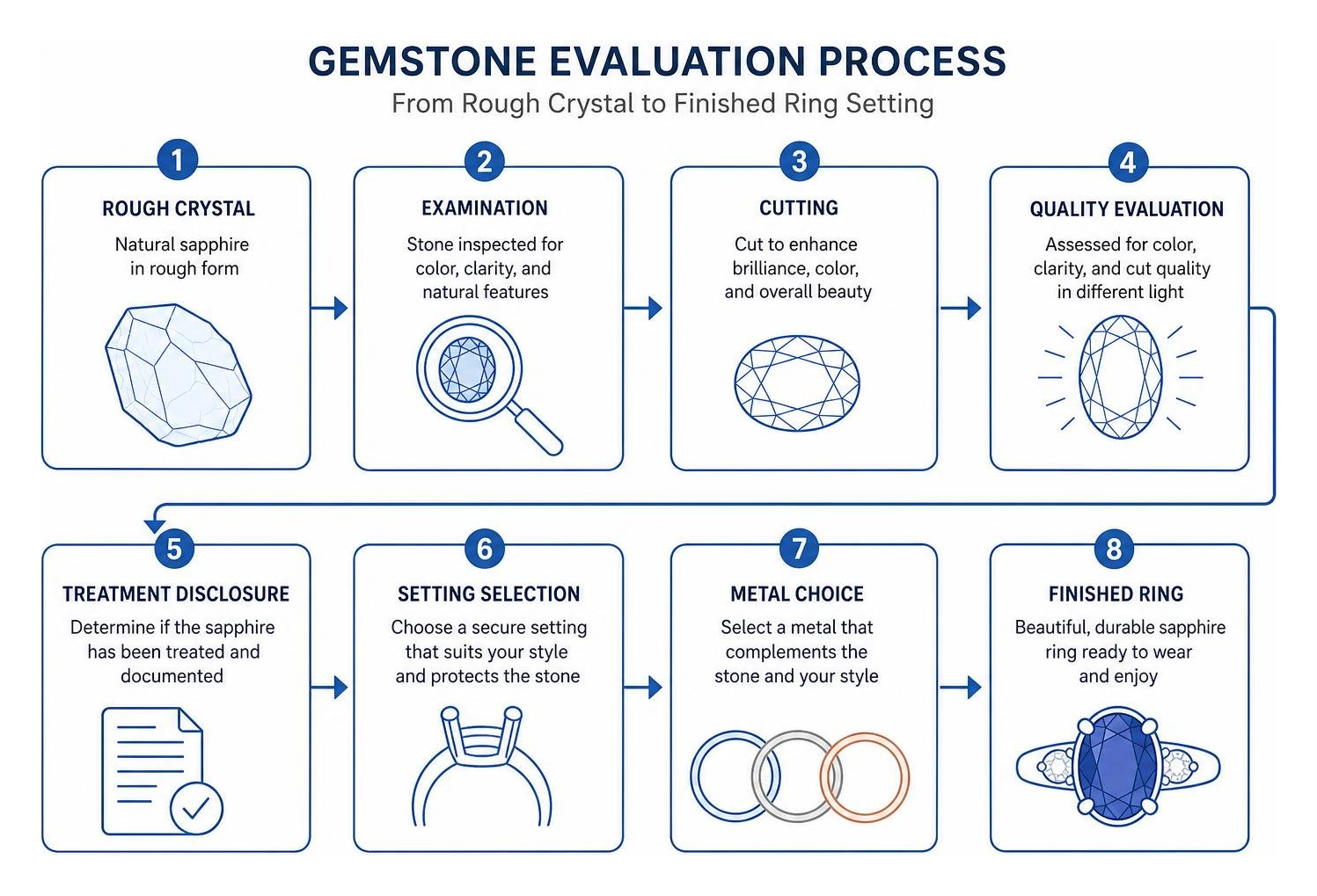
Start with the color you love, then check the stone in different light. Look for even color, no obvious flaws, and a cut that looks bright rather than dark or see-through. Ask whether the sapphire has been treated, and choose a secure setting and a metal that suits your style. Before buying, confirm the ring size and get the stone's details in writing.
Sapphire rings offer more than classic blue. Pink, yellow, green, and other hues make it easy to find a ring that feels personal. With a hardness of 9 on the Mohs scale, sapphire is also a strong choice for a ring worn often.
Why Sapphire Rings Are the Ultimate Modern Alternative to Diamonds
When shopping for an engagement ring or a milestone piece of jewelry, diamonds have long been the default choice. However, colored gemstones have surged in popularity, and sapphire stands firmly at the top of the list. As a member of the corundum mineral family, sapphire delivers a rare combination of exceptional durability, rich history, and vibrant beauty.
One of the most practical reasons to consider a sapphire is its resilience. On the Mohs hardness scale—which ranks mineral scratch resistance from 1 to 10—sapphire rates at a solid 9. Diamond is the only natural mineral that ranks higher at 10. This means sapphire resists daily scratches, chips, and abrasions remarkably well, making it fully capable of handling decades of continuous wear. The Gemological Institute of America provides a detailed sapphire quality factors guide that explains how color, clarity, and cut influence a stone's beauty and durability.
Beyond durability, sapphires carry centuries of romantic and royal symbolism. Historically associated with royalty, nobility, and clergy, sapphires represent wisdom, truth, sincerity, and unwavering fidelity. For couples entering marriage, these associations provide a meaningful foundation. Sapphires are also the traditional gift for celebrating a 16th wedding anniversary, symbolizing love that has deepened and endured over time.
Choosing a sapphire also opens up creative design possibilities. Whether set as a commanding solitaire, framed by a sparkling halo, or paired side-by-side with diamonds, these gems offer personality without sacrificing longevity. Many couples choose classic sapphire diamond rings to enjoy the brilliant fire of diamonds alongside the rich color of a center gemstone.
| Feature | Natural Sapphire | Natural Diamond |
|---|---|---|
| Mohs Hardness | 9 (Extremely durable) | 10 (Hardest natural mineral) |
| Primary Visual Appeal | Rich color saturation & velvet depth | Exceptional light dispersion & scintillation (fire) |
| Daily Durability | Excellent; highly resistant to scratching & chipping | Superior; completely scratch-resistant except by another diamond |
| Symbolic Meanings | Loyalty, truth, wisdom, sincerity | Everlasting love, strength, purity |
| Design Flexibility | Broad range of colors, cuts, and setting styles | Classic colorless look with a wide range of cuts and settings |
A Comprehensive Guide to Sapphire Colors and Provenance
While the velvety royal blue of Ceylon or Kashmir sapphires remains iconic, the corundum crystal family naturally occurs in nearly every color of the rainbow. Pure corundum is completely colorless aluminum oxide. The presence of trace elements during the crystal's formation deep underground dictates the gemstone's final shade.
- Blue Sapphires: Formed by trace amounts of iron and titanium interacting within the crystal lattice.
- Pink Sapphires: Colored by chromium; delicate pastel blush to vibrant magenta. A stunning example is a five stone oval pink sapphire ring, which highlights these romantic tones across a glowing band.
- Yellow and Orange Sapphires: Colored primarily by iron inclusions, producing warm golden hues.
- Padparadscha Sapphires: An exceedingly rare and highly coveted variety containing a delicate blend of pink and orange, reminiscent of a tropical lotus blossom at sunset.
The geographic origin of a sapphire often influences its visual character. Sri Lanka (historically Ceylon) is world-renowned for producing bright, luminous cornflower and royal blues, alongside brilliant pastels. Madagascar has emerged as a premier source of fine blues and vibrant fancy colors. Australia, Tanzania, Thailand, and Myanmar (Burma) also yield sapphires with unique regional undertones, from deep midnight blues to earthy bi-color gems.
Green Sapphire: Color, Durability, and Value
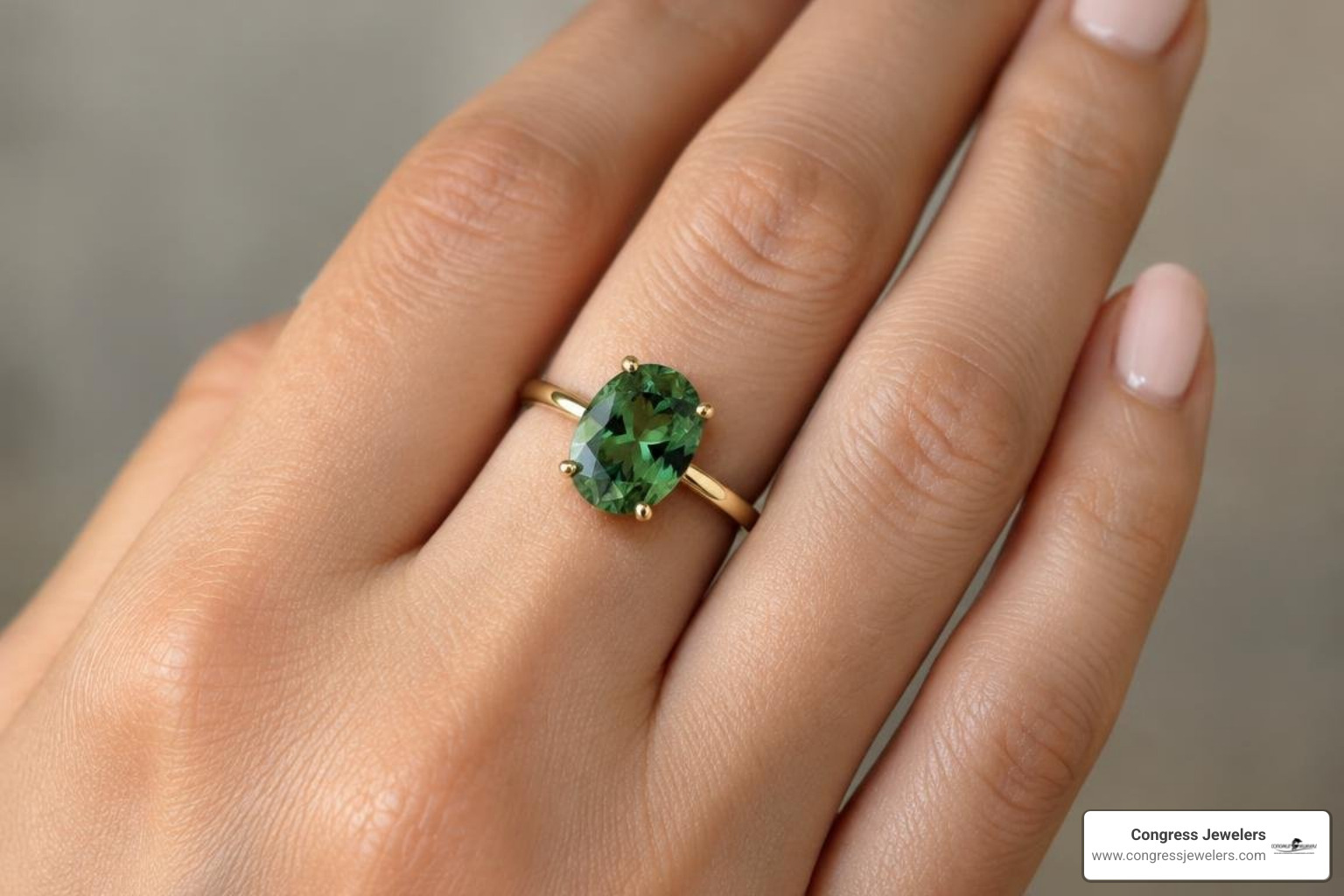
Green sapphires have quickly become one of the most sought-after alternatives for contemporary engagement rings. Their shades range from light sage, mint, and olive to deep forest green. This distinctive coloration is caused by iron trace elements within the corundum structure.
Unlike emeralds—which have natural fissures, sit at 7.5 to 8 on the Mohs scale, and often require gentle handling—green sapphire delivers an impressive hardness of 9. This makes green sapphire far more resistant to chipping during daily activities.
From a value perspective, green sapphires offer an accessible entry point into fine precious gemstones:
- Smaller Center Stones: Look for even color distribution, a lively cut, and clarity that appears clean to the eye.
- Larger Center Stones: Prioritize a secure setting, treatment disclosure, and a cut that maintains color across the face of the stone.
Compared with emeralds and blue sapphires, green sapphires offer a distinct look, strong durability, and a broad range of color tones. Choose the stone that best suits your preferred hue, clarity, and ring design.
Exploring Unique Color Varieties in Sapphire Rings
Beyond traditional hues, fancy sapphires offer endless opportunities for bespoke jewelry:
- Yellow Sapphires: Prized for their sunny warmth and brilliance, these stones capture light exceptionally well, offering a lively, radiant alternative to yellow diamonds.
- Violet and Lavender Sapphires: These pastel gems balance cool blue and warm purple undertones, shifting delicately depending on whether they are viewed in natural daylight or incandescent lighting.
- Color-Change Sapphires: Rare specimens that exhibit distinct color shifts—such as shifting from blue in daylight to purple under indoor incandescent bulbs—due to complex trace mineral combinations.
When evaluating any fancy sapphire, focus on color saturation (the intensity of the hue) and eye-clean clarity. While natural inclusions are part of a genuine gemstone's fingerprint, a well-cut stone ensures light enters, reflects off the internal facets, and returns to your eye with maximum brilliance rather than escaping through the bottom.
Modern Settings and Metal Pairings for Every Style
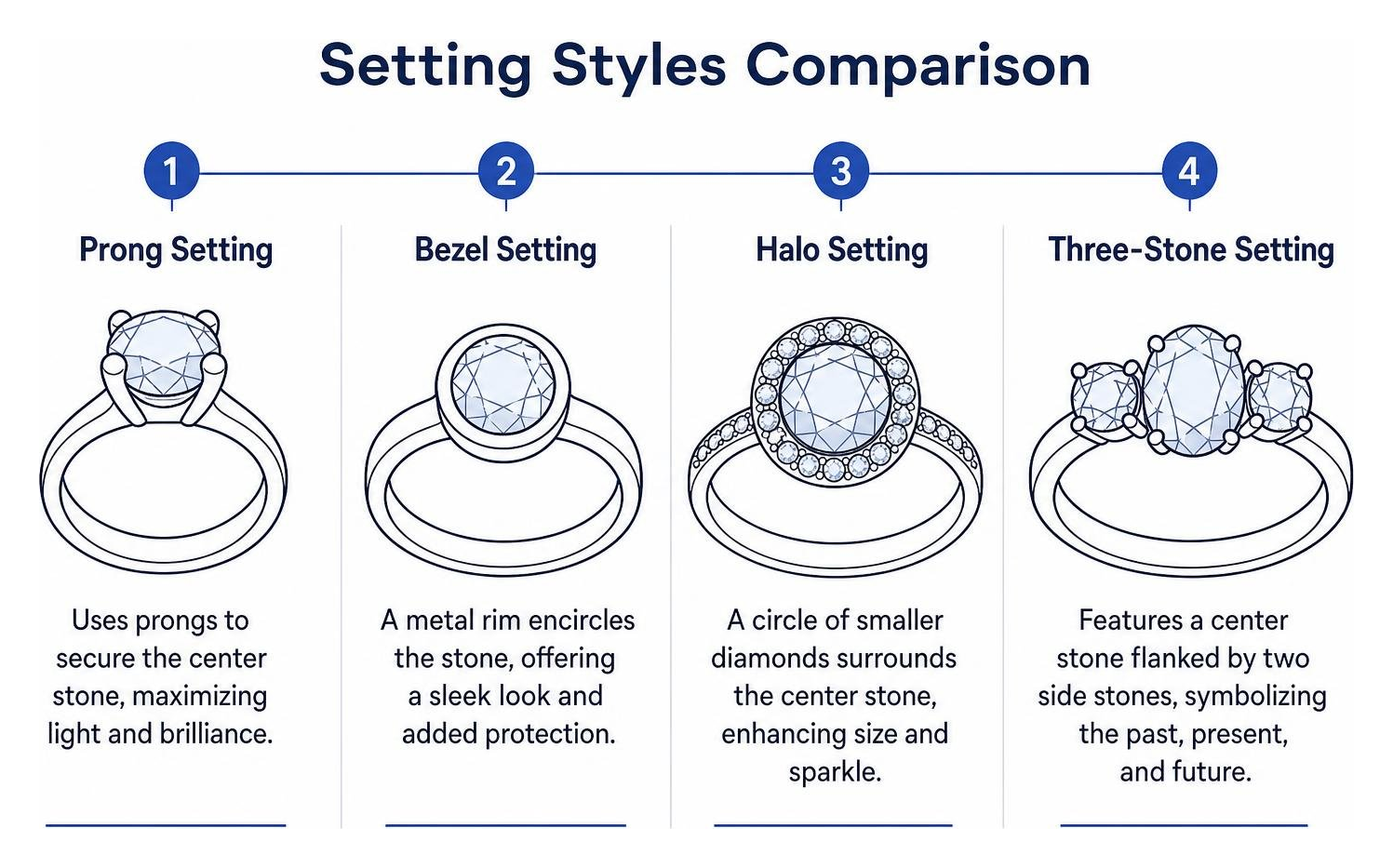
The mounting you choose secures your gemstone while shaping the overall character of the ring. Whether you lean toward vintage-inspired filigree or sleek modern minimalism, sapphire adapts effortlessly to various setting techniques.
- Solitaire Settings: A classic four- or six-prong solitaire places all visual focus on the center sapphire, maximizing light entry from all angles.
- Halo Settings: Surrounding a center sapphire with a ring of pavé diamonds creates a striking contrast that makes the center gem appear larger while amplifying overall sparkle.
- Three-Stone Mountings: Representing the past, present, and future, three-stone rings frequently frame an oval or cushion sapphire between two brilliant diamonds for balanced symmetry.
- Vintage and Intricate Bands: Detailed metalwork adds texture and artistic distinction. For example, an 18k white gold lacey oval sapphire ring brings timeless, heirloom-quality detailing to the hand.
- Accent Stone Bands: Incorporating custom-cut side gems creates a tailored architectural look, as seen in an 18k white gold baguette sapphire shank engagement ring.
Best Metals for Enhancing Sapphire Brilliance
The metal you pair with your sapphire plays a crucial role in framing its unique color profile.
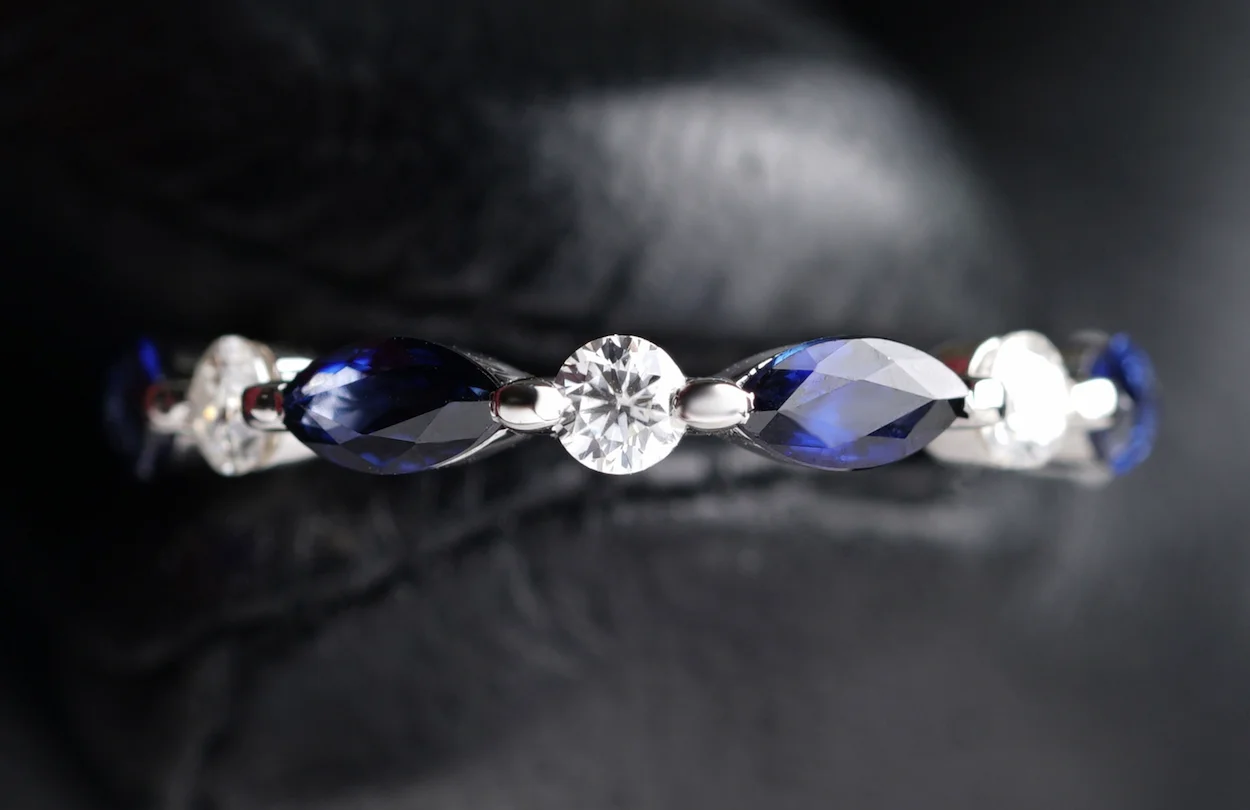
- Platinum: Naturally white, dense, and hypoallergenic, platinum provides an ultra-secure hold for precious gems. Its cool silvery sheen creates a crisp, clean background that allows the vivid blue of fine sapphires to pop. Exploring platinum sapphire diamond rings shows how effortlessly this noble metal complements rich jewel tones, with a standout piece being a classic platinum oval blue sapphire ring.
- 18k White Gold: Like platinum, white gold delivers a cool, reflective surface that enhances the crisp brilliance of blue, green, and purple sapphires while offering lightweight everyday comfort.
- 18k Yellow Gold: The warm glow of yellow gold creates an appealing, high-contrast frame for deep blue sapphires. It also harmonizes naturally with earthy olive-green, teal, and warm yellow sapphires.
- Rose Gold: The gentle coppery tones of rose gold pair exquisitely with peach, pink, and pastel Padparadscha sapphires, creating a romantic, vintage aesthetic.
Choosing the Right Cut and Setting for Sapphire Rings
Unlike diamonds, which are cut to standardized mathematical proportions to maximize light dispersion, colored gemstones are custom-faceted by lapidaries to maximize color intensity while preserving carat weight.
- Oval Cut: The most popular cut for sapphires. Its elongated shape flatters the finger while distributing color evenly across the face of the gem.
- Cushion Cut: Combining a square or rectangular outline with rounded corners, cushion cuts offer deep pavilions that intensify rich color saturation.
- Emerald Cut: Step-cut facets create a hall-of-mirrors effect, showcasing high-clarity stones with sleek, geometric sophistication.
- Round Brilliant Cut: Delivers maximum sparkle and balances beautifully in classic solitaires or four-prong halos.
When inspecting a cut sapphire, watch for "windowing"—a term for stones cut too shallow, where the center appears washed out or transparent like a windowpane. A well-proportioned cut reflects light back across the entire face of the gem, creating a vibrant, glowing pool of color.
Frequently Asked Questions About Sapphire Rings
How do you clean and maintain a sapphire ring at home?
Cleaning your sapphire ring at home is simple and safe:
- Mix a few drops of mild dish soap into a bowl of warm (not boiling) water.
- Soak the ring for 10 to 15 minutes to loosen accumulated oils, hand lotions, and dust.
- Gently scrub around the gemstone facets and underneath the mounting using an extra-soft baby toothbrush.
- Rinse the ring thoroughly under lukewarm running water (ensure the drain is closed or use a strainer).
- Pat dry with a clean, lint-free microfiber cloth.
Avoid using harsh chemicals like bleach, chlorine, or abrasive scrubbing powders. While sapphires are durable enough for ultrasonic cleaners in most cases, stones with heavy natural inclusions or fracture fillings should only be cleaned using mild soap and water. We also recommend bringing your ring to our jewelers once a year to inspect the prongs and ensure the stones remain securely seated.
How does green sapphire compare with other sapphire colors?
Green sapphires are known for their earthy range of hues, from soft sage and mint to deep forest green. Their appearance can vary with the cut, lighting, and the balance of blue and yellow undertones in the stone.
Compared with emeralds, green sapphires offer greater hardness for everyday wear, rating 9 on the Mohs scale versus 7.5 to 8 for emeralds. Their natural clarity and varied green tones make them a distinctive choice for rings.
Can a sapphire ring be given for occasions other than an engagement?
Yes. While sapphires are beloved for engagement jewelry, their versatility and rich symbolism make them suitable for many major milestones:
- 16th Wedding Anniversaries: Sapphire is the official gemstone celebrating sixteen years of marriage.
- September Birthdays: Sapphire is the traditional birthstone for September, making it an ideal birthday gift.
- Milestone Achievements: Sapphire rings make memorable gifts to celebrate university graduations, career promotions, or personal accomplishments.
- Heirloom Gifts: Because of their durability, sapphire rings are often purchased to pass down through generations as enduring family treasures.
If you are exploring fine gemstone pieces for any special occasion, you can discover a wide variety of fine sapphire jewelry in Cape Coral FL and our Sanibel Island gallery.
Conclusion
A sapphire ring is more than a piece of fine jewelry—it is a durable, deeply personal work of art that effortlessly transitions from daily wear to formal celebrations. With a rainbow of natural hues, exceptional scratch resistance, and an array of mounting options, sapphires provide a versatile foundation for any jewelry collection.
Whether you are drawn to classic royal blue set in platinum, an earthy green sapphire framed in yellow gold, or a custom three-stone design, finding the right ring starts with quality craftsmanship and ethical gemstone sourcing. At Congress Jewelers, our fourth-generation family artisans take pride in helping you select, design, and care for jewelry that will be cherished for lifetimes. We invite you to explore the handcrafted sapphire gemstone collection and discover the piece that speaks to your personal story.


Leave a comment